






























How to Label Warehouse Racking: A Step-by-Step Guide
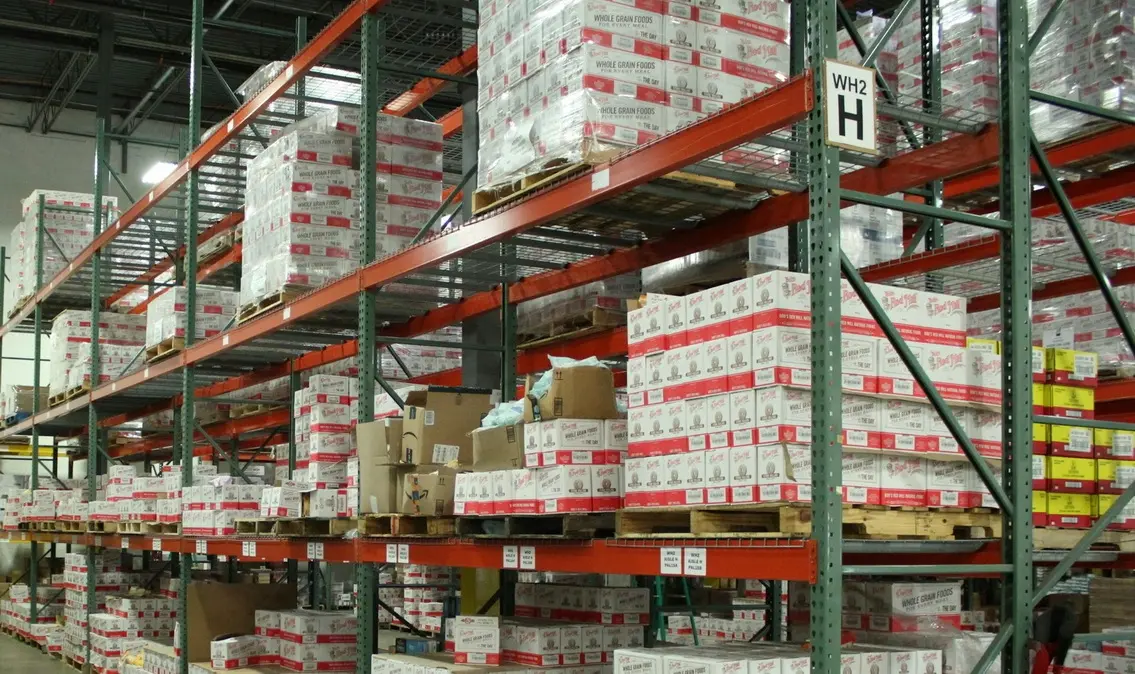


Retail warehouses that scan barcoded rack labels into their warehouse management system achieve an average order fulfillment accuracy rate of 99.5%, compared with 92% for those that do not (Aberdeen Group). Knowing how to label warehouse racking makes that level of accuracy possible: A consistent location naming system makes every rack position and every pallet position into a scannable address readable by both pickers and software.
When you install warehouse rack labels strategically, you gain a host of benefits, including improved supply chain efficiency, product visibility, increased productivity and, perhaps most importantly, fewer errors. Warehouse rack labeling is a relatively straightforward process, but it is crucial to your long-term success.
In this guide, we’ll walk you through finding your racks, naming your location, deciding between standard or serpentine numbering, picking robust label material and confirming each scan so your labeling system keeps pace with your expanding operation.
The worldwide warehouse population was projected to exceed 180,000 storage facilities by 2025, an increase from 150,000 in 2020, due in large part to the rise of eCommerce. Whatever your customer vertical, all warehouses (large or small, across industries) should look to optimize every square foot of space.
On a per square foot basis, specialty warehouse space commands the highest average rental rates. As such, maximizing your existing space is one of the best ways to save resources. Warehouse rack labels may be small in size, but they play a huge role in warehouse operational efficiency.
The advantages of effective labeling include:
Large or small, every warehouse can improve their rack labeling. Organizations that invest in and maintain proper labeling have a sizeable advantage over the competition in efficiency, cost and productivity.
Every warehouse is different. Regardless of the racking solution you use, your team must agree on a rack labeling strategy and apply it to the entire warehouse.
Follow these steps to improve warehouse efficiency with strategic labeling.
Regardless of your organizational system, step one to effective labeling is an easy one: label your racks. It sounds intuitive, but you can easily forget key areas, particularly if you’re spread out over a large space or multiple facilities.
Racks, units, or sections are pieces of shelving where you keep inventory/equipment. In some warehouses, a rack may be a single, extended unit running the full width of the aisle.
Other warehouse operations break shelving down into smaller sections. For operations dealing with numerous SKUs or products that vary greatly in size, this is a more logical choice. If this sounds like your warehouse, make sure to tag each individual section of a rack uniquely, rather than the whole rack assembly.
A rack location naming convention ensures every pallet position has a unique scannable address. Here is an example standard format (Zone-Aisle-Bay-Level-Position):
A label with identification A-12-04-02-B would refer to Zone A, Aisle 12, Bay 04, Level 02, Position B. Maintaining aisle/bay/level at two digits allows for scalability beyond 9 racks without needing to rename. Combine this convention with serpentine aisle numbering to reduce forklift travel distances. Input these fields into your WMS so the label and WMS record are always synchronized.
●CAMCODE
Warehouse RackBuild a standardized location label code for any rack position. Fill in each level of your location hierarchy and the tool assembles a scan-ready code in the Zone → Aisle → Bay → Level → Position format.
The code concatenates each level of your location hierarchy in fixed order: Zone-Aisle-Bay-Level-Position. Levels are read bottom to top, so the ground shelf is 01. Two-digit aisle, bay and level fields leave room to scale past nine without renumbering. With serpentine numbering, odd aisles are walked in one direction and even aisles in the reverse, so pickers never double back. The code itself is generated from your inputs; nothing is sent anywhere.
Order fulfillment accuracy averages 99.5% with a WMS versus 92% without one (Aberdeen Group), and a consistent location code is what lets a scanner resolve every pick. Tool by Camcode · camcode.com
Evaluate your current picking methods to see if your operation would benefit more from using a standard or serpentine labeling system.
Decide on your numbering method before you assign numbers to racks. This will allow you to physically space racks in the most intuitive way for how workers flow around the facility. For a small, uncomplicated warehouse, you’ll likely find the standard approach perfectly adequate.
If growth in your business or product line is on the horizon within the next five years, Serpentine is likely the better choice.
Warehouse organization and efficiency rely heavily on digital solutions such as warehouse management systems (WMS). While it’s important to follow an organizational system when labeling racks, your WMS should also complement your system.
If you don’t already use a WMS, now is the time to get one deployed into your warehouse. A WMS will automate workflows, optimize routes and catch mistakes sooner, as well as allow you to deploy advanced technologies to your warehouse. For the entire rollout process, check out our guide on how to implement barcodes in your warehouse.
Adopt QR codes and RFID/NFC tags to eliminate manual data entry, reduce errors and free up employees to do more value-added work. Warehouses using a WMS experience 99.5% order fulfillment accuracy compared to 92% for those not running a WMS (Aberdeen Group). It should come as no surprise that WMS adoption rates continue to increase.
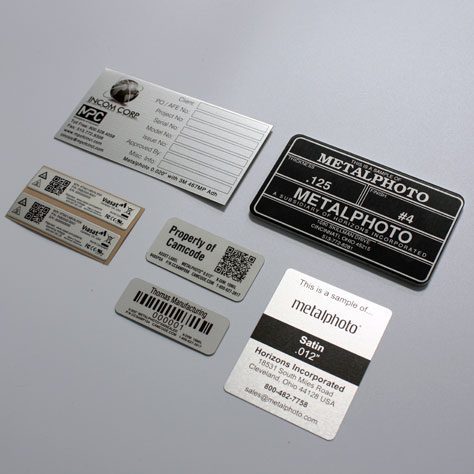
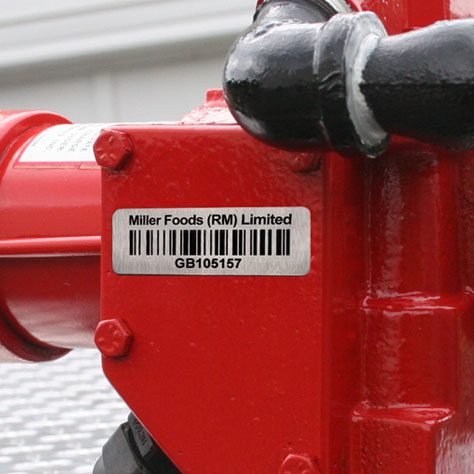
After you decide on a labeling and organizational strategy, it is time to select the best warehouse rack labels for your business. Consider the environment of your operation: the facility temperature, exposure to chemicals or moisture and whether your racking moves in a way that puts added force on its labels. These factors determine which labels for your warehouse will last.
Manufacturers of warehouse rack labels usually have labels available in these materials:
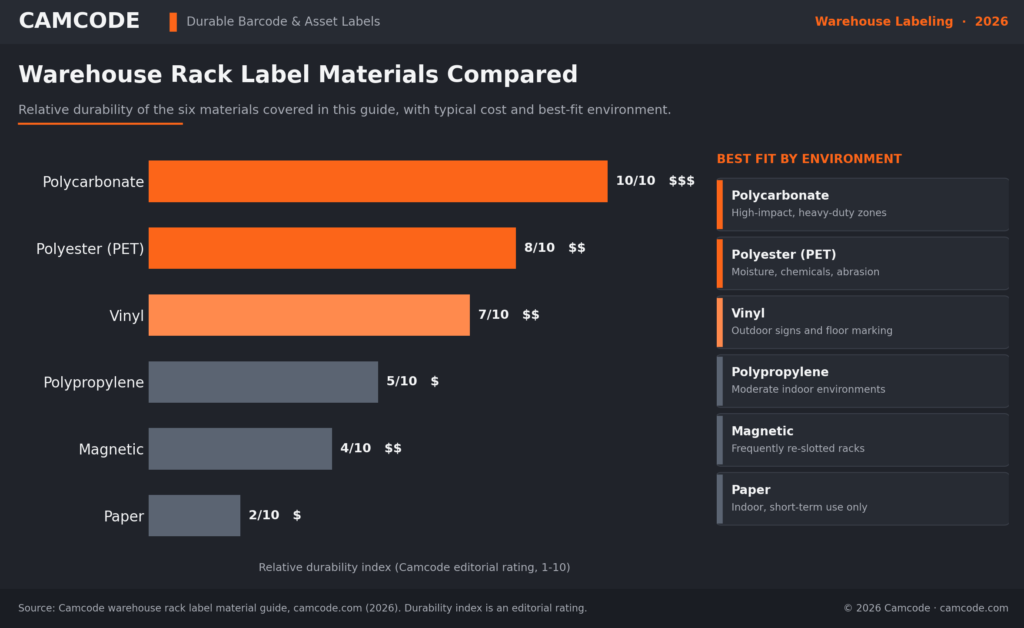
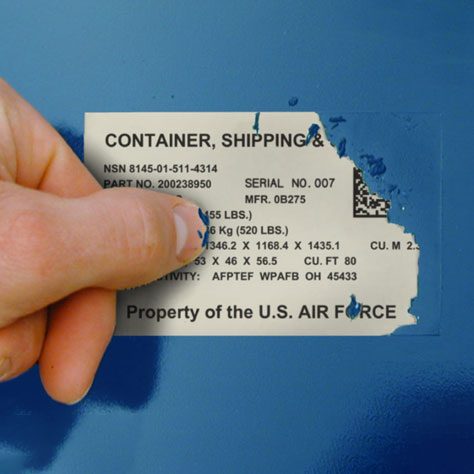
Think about how you will attach labels to your racks. Mechanical fasteners such as screws are strong and removable. If your racks don’t accommodate them, opt for an adhesive that can handle your warehouse’s temperature, humidity, and chemical conditions to ensure labels stay put.
Camcode offers rack labels for every application, environment and budget.
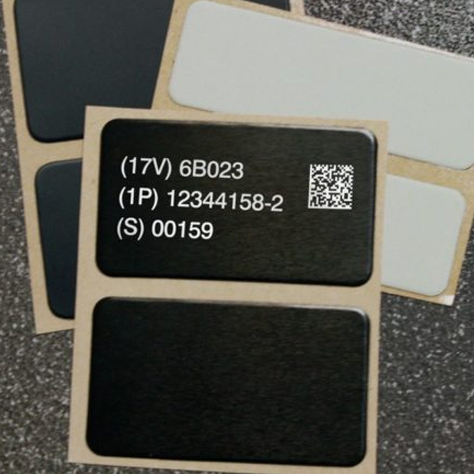
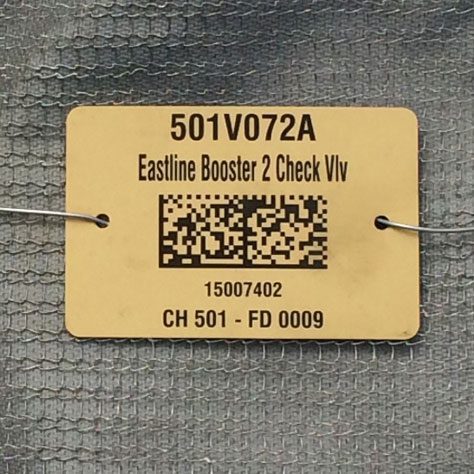
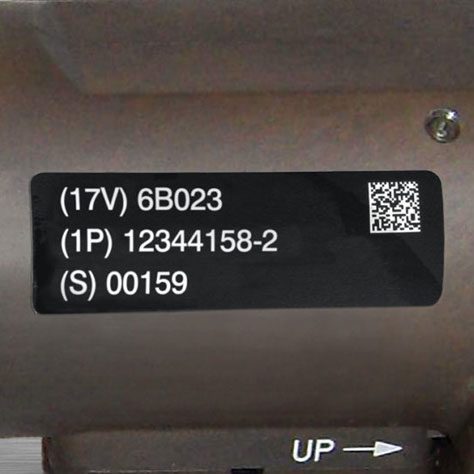
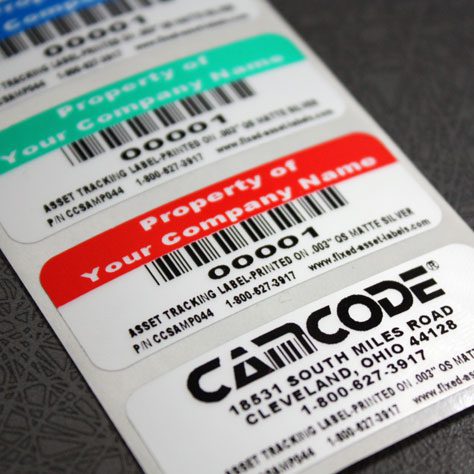
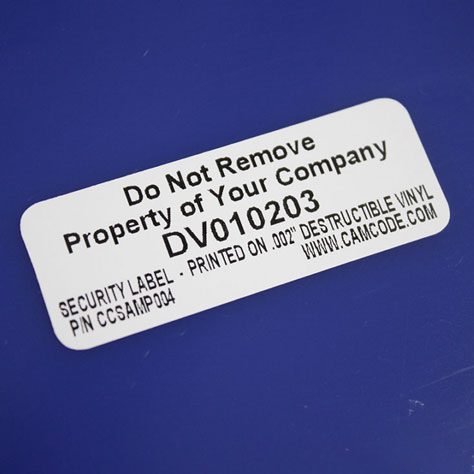
Our Polyester Warehouse Rack Labels offer robust adhesion for textured surfaces and are built to withstand harsh warehouse conditions, unlike their paper counterparts, which tend to degrade. If you need a labeling system that does many jobs at once, consider Multi-Level Warehouse Rack Labels, color-coded labels set at ideal scanning levels. For temporary picking protocols with transitional racks, reusable Magnetic Warehouse Rack Labels are a good choice.
No matter the size or scope of your operation, a rack labeling plan is a key warehousing best practice. Take inventory of your entire warehouse setup, organization system and picking process prior to buying labels. Doing so will save you money in the long run and eliminate confusion due to unreadable labels.
Now that you have chosen your materials, you are ready to apply the labels. This tip is particularly useful for dense racking with multiple levels.
Label racks starting from the bottom up. Label the bottom row of racks 01, the next row 02, etc. Even if you aren’t using that many levels now, start out using the double-digit (or triple-digit) format so that you have room to expand before you need to go back and renumber everything.
The final step before going live with your warehouse rack labels is testing and validation. Walk through each aisle with a barcode scanner and verify every label scans correctly the first time and reads back the location code displayed on the label.
Test scanning from a forklift at the proper distance and angle, not just by hand. Ensure that the code you enter into your Warehouse Management System corresponds with the actual slot, so that a pick ticket for A-12-04-02-B goes to the correct pallet.
Test your labels under actual lighting, temperature and dust conditions before rolling them out everywhere. Re-scan a sample of rack labels quarterly to identify faded, peeled or damaged labels before they lead to mispicks.
Safety should always come first, even when labeling racks. Labels can be used for more than just organizing your inventory. You can use them to mark hazardous areas and include handling instructions and load capacities. Use these tips to ensure employee safety:
Rack labels are even more effective when used alongside other labels that enhance workflow, safety and warehouse efficiency::
You should invest time and money into an organized warehouse layout. However, no matter how great your warehouse is designed, if you don’t have proper labeling, you’ll experience setbacks. Warehouse rack labels increase efficiency throughout your supply chain and boost product visibility/productivity while reducing errors. By adhering to warehouse label best practices, you can have a warehouse that runs like a well-oiled machine with high efficiency, safety, and scalability.
Get lasting results with Camcode’ durable, high-quality warehouse rack labels. From permanent polyester labels and multi-level scanning labels to flexible magnetic labels, our products help you put your optimized warehouse strategy into action.
Contact Camcode today and learn how to build a labeling system that creates enduring success.
Start at the ground and work your way up. Assign each level of the rack its own identifier. Number the lowest row of the rack 01, then number the second row 02, etc.
This method scales because you can always add levels to the rack later. You can also combine rack numbers with aisle and section designations to facilitate faster picking.
Organizing warehouse racks begins by sorting inventory by size, type or frequency of use. Fast-moving or high-demand inventory should be stored in easily accessible areas such as lower or middle levels.
Label aisles, racks and bins with a standard format like alphabetic or numeric designations so employees can quickly locate products.
That depends on what you carry, the size of your facility, how many orders you process and more. However, there are three main types of warehouse layouts: U-shaped, straight line and L-shaped.
Label by location, not SKU. Put each rack position into a fixed location (Zone-Aisle-Bay-Level-Position), and have your WMS system assign products to those locations.
Location labels do not move with the inventory, so you only have to relabel a slot when the rack moves, not every time the SKU at that slot changes.
The warehouse labeling process consists of five steps:
Follow the Zone-Aisle-Bay-Level-Position format for your template. Create your codes using the Location Code Builder found on this page, or download our free Warehouse Labeling Checklist to see the whole setup process.
Printed, ready-to-scan labels from Camcode are created using your specific code configuration.
Our sales engineers are experts in automatic asset tracking, tagging and identification,a nd can answer all your questions. Get in touch now.
Lets Talk ›Enter your information and get a free checklist of the top questions to answer and tips to plan a successful asset tagging project for any warehouse management system implementation.