



































11 Problems in Warehouse Operations (and How to Solve Them)



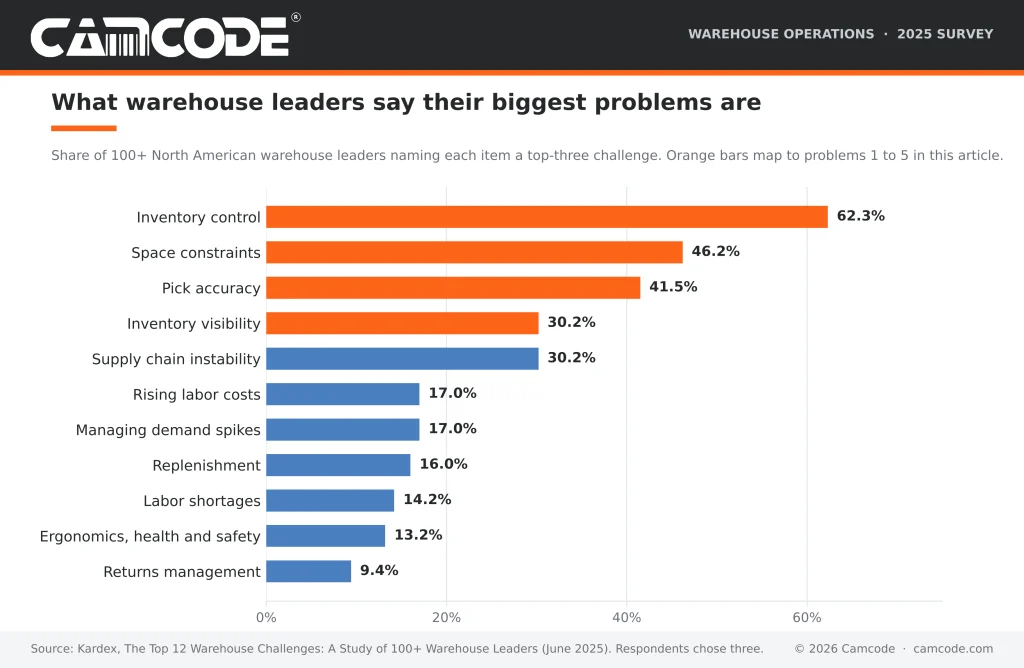
Labor productivity is the number one problem in warehouse operations for 61% of U.S. operators, according to inFlow’s State of Inventory Management 2026 survey of 400 warehouse and inventory professionals. Inventory control leads Kardex’s June 2025 survey of 100+ warehouse leaders at 62.3%.
The most common problems in warehouse operations are inaccurate inventory records, excessive picker travel time, poor space utilization and disarray, an outdated layout and location labels that fail, followed by six more that show up in the same surveys.
Each one has a fix and a metric; this article provides both.
Modern-day warehousing operations have the gift of automation, WMS software and real-time visibility, yet the same problems keep showing up because they are process problems, not technology problems.
This article takes 11 problems in warehouse operations in turn, the five that cost the most first and then labor turnover, safety, manual data entry, returns, forklift batteries and demand spikes: how to spot each one, how to fix it and the metric that tells you the fix worked.
Addressing these challenges starts with understanding the core processes of warehouse operations, from receiving and putaway to inventory management, picking, packing and shipping.
Use the table below to find your warehouse operations problem fast. Then jump to the section below for the detailed explanation of the right way to fix it.
CAMCODE| # | Problem | How you notice it | Fix | Metric to watch |
|---|---|---|---|---|
| 1 | Pickers walk too far | Pick rate falls at peak; pickers zig-zag the floor | Velocity slotting, batch and zone picking, clear location map | Lines picked per labor hour |
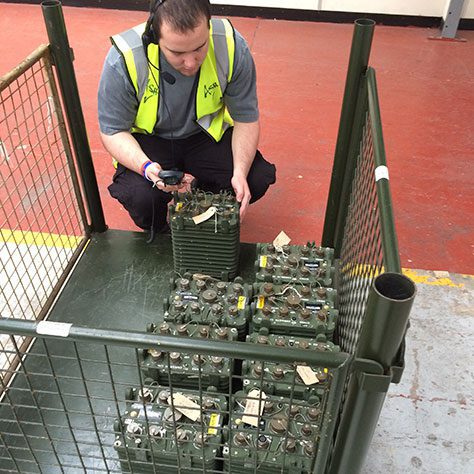
| 2 | Inventory records are wrong | Stockouts on items the system says are in stock; count adjustments | Scan every move, daily cycle counts, labeled bins | Inventory record accuracy |
| 3 | Warehouse in disarray | Blocked aisles, overflow pallets on the floor, debris | 5S routine, lean inventory, space utilization check | Space utilization (85% ceiling) |
| 4 | Outdated layout | Fast movers sit far from pack; congestion at one dock | Annual re-slot, dynamic slotting in the WMS | Travel time per order |
| 5 | Labels failing | Scan errors, rescans, pickers reading bin IDs by eye | Match label material to the environment; relabel racks and bins | First-scan read rate |
| 6 | Labor shortages and turnover | Weeks-long ramp for new hires; overtime that never ends | Labeled locations, directed picking, cross-training, labor standards | 90-day retention by shift |
| 7 | Safety and congestion | Near misses at intersections; loads in travel paths | Floor marking, pedestrian lanes, signage in the 5S audit | Near misses per month |
| 8 | Manual data entry | Keyed counts, paper pick lists, transposed digits | Scan at every touch; label unlabeled items at the dock | Keystrokes per transaction |
| 9 | Returns processing | Returns pallet sits for a week; stockouts on items in the building | Dedicated returns lane, scan and grade on arrival | Returns processed within 24 hours |
| 10 | Forklift battery life | Trucks dead at shift start; long charge swaps | Lithium-ion where the charging math works | Charging downtime per shift |
| 11 | Demand spikes | Peak breaks slotting, staffing and dock schedule | Re-slot six weeks out, cross-train, book carrier windows early | Orders shipped on time at peak |
Order pickers spend too much time walking because travel is the largest single component of a pick: about 50% of a picker’s time goes to travel between locations while order picking as a whole costs as much as 55% of total warehouse operating expense, according to de Koster, Le-Duc and Roodbergen’s review in the European Journal of Operational Research. Pick accuracy was the third most common challenge (41.5%) in the Kardex 2025 survey.
Travel is where accuracy breaks down. The problem shows up as pickers zig-zagging the floor to reach designated inventory, pick rates that fall when volume rises and associates who miss their targets at peak.
Cut the distance first, then the touches. Slot by velocity: the 20% of SKUs that generate most of your picks belong in the golden zone between waist and shoulder height, closest to the pack station. Review the slotting every quarter.
Your current WMS should support batch picking (one trip for several orders), zone picking (each picker owns an aisle) or wave picking (releases timed to carrier cutoffs) and can tell you which one fits your order profile.
Another cause is poor and/or outdated location mapping. Keeping several SKUs in one location or storing your most frequently replenished items in a remote corner forces associates to take extra steps on every order. A location numbering scheme that reads in the same direction a picker walks, with every bin labeled, removes the hunting.
Once the layout and slotting are right, automation can take the remaining travel: pick-to-light, automated carts, AS/RS and robotic order picking all move product to the person instead of the person to the product. Measure lines picked per labor hour before and after each change. If the number does not move, the change was not the fix.
The cost case for fixing picking first has been settled research for years:
“The cost of order picking is estimated to be as much as 55% of the total warehouse operating expense”
– René de Koster, Tho Le-Duc and Kees Jan Roodbergen, Rotterdam School of Management, Erasmus University. European Journal of Operational Research, 2007.
That’s why the picking fix comes first in this article: it is where the largest share of your labor budget is spent.
Inventory inaccuracy is the most reported problem in warehouse operations. In the Kardex 2025 survey, 62.3% of warehouse leaders named inventory control their top challenge. In inFlow’s 2026 survey 44.8% cited inaccurate inventory data while 44% hit a stockout at least once a month.
The cause is usually process rather than people: 84.8% of the inFlow respondents still run inventory on spreadsheets and 27% keep paper records, so a putaway to the wrong bin, an uncounted return or a pick that was never confirmed never reaches the system.
Scan every move. Receiving, putaway, pick, pack and ship each get a barcode scan of the item and the location, so the system learns about a mistake the moment it happens instead of at the annual count. Warehouse inventory tracking built on scans rather than keystrokes is the single biggest accuracy lever available to a small operation.
Our step-by-step guide to implementing barcodes in a warehouse covers the label, scanner and software decisions.
Then replace the once-a-year physical count with cycle counting:
Reconcile every variance to its cause. How to audit warehouse inventory walks through the count process. Track inventory record accuracy as the percentage of locations where the system count matches the physical count. Treat every miss as a process defect to trace, not a number to adjust.
Inefficient warehouse space utilization usually looks like disorganization on the floor: overflow pallets in aisles, debris at the dock and inventory parked outside its system location. Space constraints ranked second (46.2%) in the Kardex 2025 survey and 44.2% of operators in inFlow’s 2026 survey flagged space utilization.
The solutions are a weekly 5S housekeeping routine, lean inventory that removes excess stock and a space utilization check against the 85% ceiling. Cleanliness and organizational issues happen to the best of us from time to time, whether they are due to poor management, ineffective training or unexpected changes in workflow. The cost runs from lowered efficiency to property damage, bodily harm and a fine.
The fix for a disorganized warehouse is a weekly 5S routine with a zone owner for every area:
The same walk confirms that all inventory sits in its system location, which feeds the accuracy fix in problem 2.
If excess inventory and insufficient storage are causing your problems in warehouse operations, adopt lean inventory practices for a longer-lasting, clutter-free solution. You will only be working with the inventory you actually need, which frees space for better organizational models.
Then measure the space: calculate your warehouse space utilization and keep location occupancy below the 85% ceiling, because the Prologis Industrial Business Indicator put the national average at 85% in Q2 2025 and congestion costs start above that line.
Prologis, which tracks utilization across its customer base every quarter, expects the squeeze on space to continue:
“Competition for quality space will intensify, especially in high-barrier development markets.”
– Chris Caton, Managing Director, Global Strategy and Analytics, Prologis. Logistics Management, 2025. Source
Fixing disarray inside the four walls you already have is cheaper than leasing the next building. It is also available this quarter.
When you first established your operation, you and your colleagues may have poured your hearts and souls into building a sleek and strategic layout for your warehouse, but now the space seems to be working against you, not for you. An outdated layout usually shows up as fast movers that sit far from the pack station, a receiving dock that doubles as overflow storage and congestion at one aisle while three others sit empty.
Reassess the design at least once a year against the current order profile and re-slot the warehouse to match it. Pull 12 months of pick data, rank SKUs by lines picked and move the top movers into the forward pick area; the rest can go to reserve storage.
Also, be sure to review the warehouse layout design and the racking layout at the same time, because a re-slot inside the wrong rack configuration only moves the bottleneck. Better space utilization was the benefit most often cited by warehouse leaders who automated (78%) in the Kardex 2025 survey.
The dynamic slotting features in most WMS platforms deliver part of that gain without new equipment: the system re-ranks slots as velocity changes instead of waiting for the annual review.
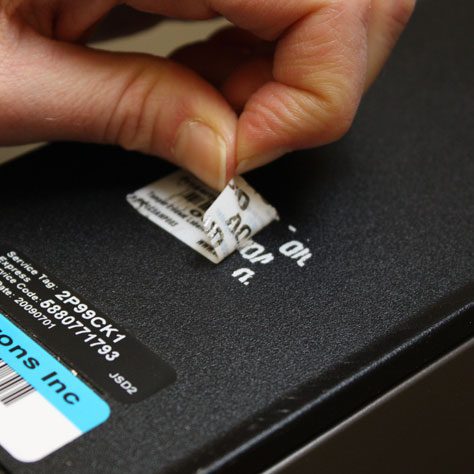
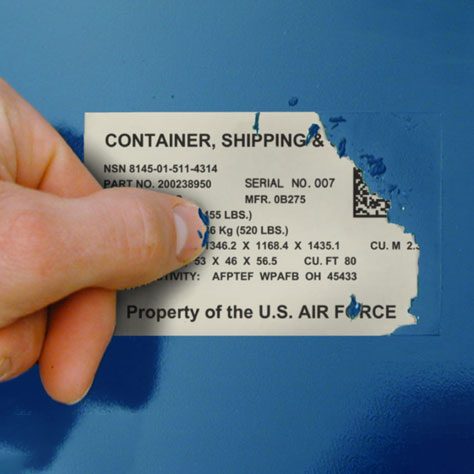
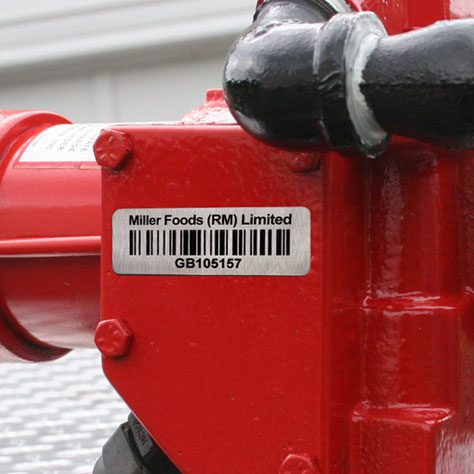
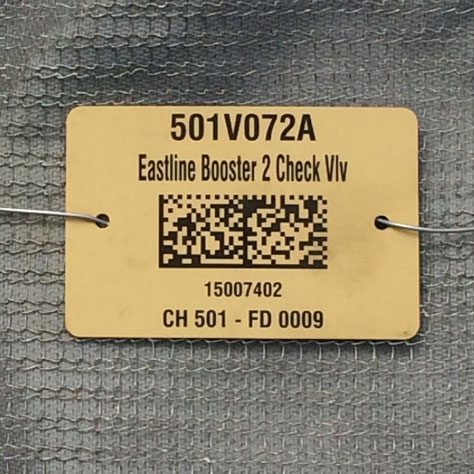
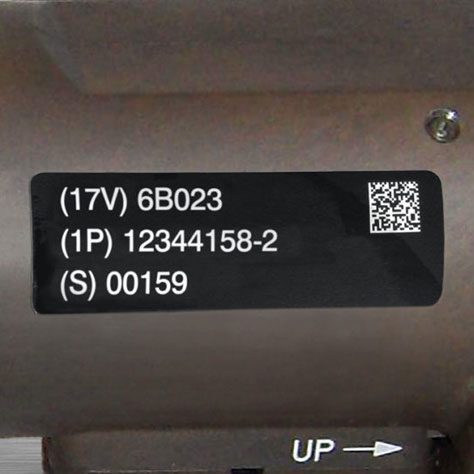
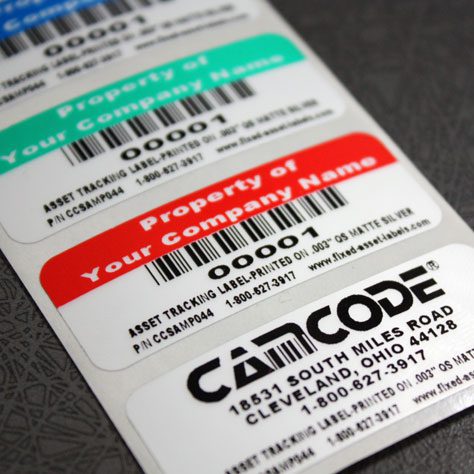
Your operation has spent valuable time and far too much money on warehouse labels and asset tags that do not stay put or keep their integrity, which leads to frequent scanning errors and overall problems in warehouse operations. Every failed scan is either a rescan, a keyed entry or a guess.
All three feed problem 2. Mitigating errors is the top reason warehouse leaders give for automating (71%) in Zebra’s 2025 Warehousing Vision Study. A label that cannot be read is the first error in the chain.
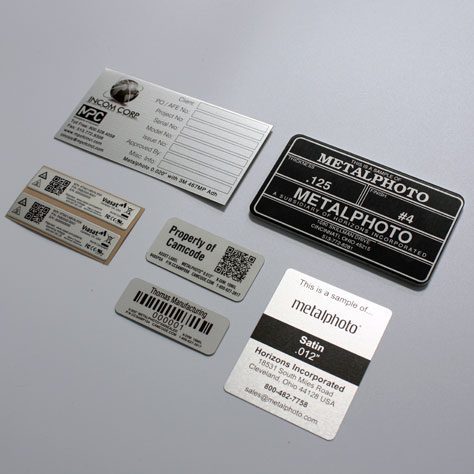
Learn how to choose the right warehouse label system. Match the material to the environment: polyester labels for dry ambient racks, aluminum or Metalphoto for abrasion and chemical exposure, cold-storage adhesives for freezers and retroreflective warehouse rack labels where forklift drivers scan upper beams from the aisle.
Then standardize the barcode symbology and location numbering so every bin, rack beam, floor location and dock door scans the same way (the barcode implementation guide covers the choices).
Track first-scan read rate by zone; a zone that drops below 99% is telling you which labels to replace next.
Hiring and keeping qualified workers ranked second among supply chain challenges in the 2026 MHI Annual Industry Report. Sixty-nine percent of frontline associates report a lack of qualified staff and 74% worry they spend too much time on tasks that could be automated, according to Zebra’s 2025 Warehousing Vision Study.
The problem shows up as a new-hire ramp measured in weeks, overtime that never ends and a quits rate above the industry’s: the BLS quits rate for transportation and warehousing was 1.9% in August 2026, so a facility losing more than 2% of staff a month has a local problem, not an industry one.
Make the job easier to learn before you make it better paid. Labeled locations, a WMS that directs each pick and cross-training across zones cut a new hire’s ramp from weeks to days.
The same Zebra study found 93% of associates say more automation and mobile technology would help attract and retain workers. Post a labor standard (lines per hour) for each task so associates know the target, pair every new hire with a lead for the first week and track 90-day retention by shift and supervisor to find where people leave.
Forklifts caused 84 work-related deaths in 2024 and 15,460 injuries with days away from work across 2023 and 2024, per National Safety Council analysis of BLS data. Seventy-two percent of warehouse associates say they are concerned about safety in Zebra’s 2025 study. Congested aisles, pedestrians in forklift lanes and loads stacked in travel paths are the usual causes.
All three trace back to problems 3 and 4.
Mark pedestrian lanes and forklift lanes on the floor, post aisle and clearance signs at eye level, keep staging areas inside painted boxes and audit the marking in the weekly 5S walk. Put the floor-marking and sign plan inside the layout review from problem 4 so a re-slot never leaves a pedestrian lane running through a forklift aisle.
Track near misses as well as recordables; a congested intersection shows up in near-miss reports months before it shows up in the OSHA log.
Zebra’s global warehouse strategy lead put the link between automation and safety plainly when the 2025 study was released:
“Automating material movement, data collection, and information management helps make busy warehouses safer.”
– Andres Boullosa, Global Warehouse Vertical Strategy Leader, Zebra Technologies. Zebra Technologies Warehousing Vision Study release, February 2025.
Scanning at every touch (problem 2) and directed picking (problem 1) are the data-collection automation he is describing, so the safety fix and the accuracy fix are the same project.
Paper pick lists and keyed counts are the source of most inventory errors: 27% of operators still keep paper records and 84.8% run on spreadsheets. Each keystroke is a chance to transpose a digit. The error is invisible until a picker finds the wrong quantity in the bin or a customer opens the wrong item.
Replace keying with scanning at the five touch points named in problem 2, starting with receiving, where one keyed error multiplies into every downstream transaction. Where a scan is not possible (a supplier’s unlabeled carton, a returned item with no barcode), print and apply a label at the dock before the item moves. Measure keystrokes per transaction; the inventory error rate falls with it.
Returns management was a top-three challenge for 9.4% of warehouse leaders, a small share that hides a large cost because returned goods that are not scanned back into a location are invisible to the system. The symptom is a returns pallet that sits for a week, a stockout on an item that is physically in the building and a write-off at year end.
Give returns a dedicated receiving lane, scan each item on arrival, grade it and put it away or dispose of it the same day. Put a disposition code in the WMS so a graded item goes straight to a sellable, refurbish or scrap location. Set a 24-hour service level for the lane so returns never compete with inbound freight for dock time.
Busy warehouses go through batteries at a high rate, especially on forklifts. The cost shows up as charging downtime, swap labor and replacement spend. A truck with a dead battery at the start of second shift is a picking problem, not a maintenance one.
Marcus Warner, writing for Inbound Logistics, recommends switching to lithium-ion batteries wherever possible: they charge faster than lead-acid, need no watering or equalizing and can opportunity-charge during breaks.
The industry is moving that way: Interact Analysis projects lithium-ion’s share of the electric forklift market rising from about 32% in 2024 to more than 70% by 2034. Lithium-ion costs more up front, so run the numbers on charging time saved per shift before you convert a whole fleet.
Managing demand spikes was a top challenge for 17% of warehouse leaders. Seasonal peaks break the same three things every year: slotting set for the off-season, staffing set for average volume and a dock schedule set for fewer trailers.
Re-slot for the peak SKUs six weeks out, cross-train so every associate can pick and pack and book carrier windows before the peak, not during it. Use last year’s peak pick data rather than this year’s forecast to choose the forward-pick SKUs. Set an orders-per-day trigger that moves the operation to its peak staffing plan automatically instead of waiting for the backlog to prove the point.
Answer eight question quiz on problems in warehouse operations about what you see on the floor and the tool ranks problems 1 to 5, the five that cost the most labor, by how much they are probably costing you, with the first fix for each.
CAMCODE
Answer eight questions about what you see on the floor. The tool ranks problems 1 to 5, the five that cost the most labor, by likely cost and gives you the first fix for each.
Answer every question to see your ranking.
Scores are computed from your answers only. Statistics shown in the results link to their sources: Kardex 2025 survey, inFlow 2026 survey, de Koster et al. 2007 and Zebra 2025 study.
Fix the problem that is costing the most labor first, because labor is the biggest line in warehouse operating expense and the one every other problem drains. Score each problem on two things: how often it happens (times per shift) and what each occurrence costs (minutes of rework, a missed order, an injury). The product of the two is your priority order. For most operations it puts picking travel and inventory accuracy at the top.
The five KPIs for a warehouse that tell you whether the fixes are working are inventory record accuracy (system count versus physical count by location), order or pick accuracy (orders shipped without error), order cycle time (order received to order shipped), space utilization (occupied locations versus available locations) and lines picked per labor hour.
Our guide to the most important warehouse KPIs defines each one and the companion piece on how to improve warehouse productivity shows what moves them. Set a baseline for all five before you change anything, then re-measure 30 days after each fix.
When it comes to warehouse management, the key to maintaining a strategically run warehouse is to continually identify your weak points and find ways to improve on them. Pick the problem that costs the most labor, baseline the KPI that measures it, ship the fix and re-measure in 30 days.
Most of the 11 problems above are solved with scanning, slotting, a weekly 5S hour and labels that survive the environment, which is a shorter list than the surveys make it look.
For the wider set of practices, see our warehouse operations best practices guide.
The most common problems in warehouse operations are inaccurate inventory records, excessive picker travel time, poor space utilization, outdated layouts and failing location labels, followed by labor shortages, safety incidents, manual data entry errors and returns backlogs.
Inventory control topped Kardex’s 2025 survey of warehouse leaders at 62.3%. Labor productivity topped inFlow’s 2026 survey at 61%.
Most warehouse problems are caused by process gaps rather than people: inventory moves that are not scanned, slotting that no longer matches order velocity, layouts designed for a different order profile, housekeeping with no owner and labels that cannot be read reliably. Each gap compounds the next, so a failed label becomes a keyed entry, which becomes an inventory error, which becomes a stockout.
The 5S rule in warehousing is a five-step housekeeping routine from lean manufacturing:
Warehouses run 5S as a scheduled hour per week per zone. It is the most direct fix for a warehouse in disarray.
The five warehouse KPIs that cover the problems in this article are
Together they measure whether product is where the system says it is, whether orders ship correctly and on time, how full the building is and how much labor each order consumes.
See the warehouse KPI guide for formulas and benchmarks.
Start with the four fixes that need no new equipment:
Those four changes attack picking travel, inventory accuracy, disarray and label failure at once. They also produce the baseline data you need before deciding whether automation pays.
Our sales engineers are experts in automatic asset tracking, tagging and identification, and can answer all your questions. Get in touch now.
Lets Talk ›Enter your information and get a free checklist of the top questions to answer and tips to plan a successful asset tagging project for any warehouse management system implementation.