





































What are Asset Tags? Types, Uses and How to Choose



Asset tags are identification labels that link physical assets to digital records, and they are the cheapest defense against the $300 million to $1 billion in equipment theft U.S. construction firms absorb each year, per National Equipment Register and NICB data.
Each asset tag carries a unique identifier, usually a barcode, QR code or RFID inlay, that connects the asset to its record in an asset tracking system. Tagged assets are easier to locate, maintain, audit and depreciate, which is why asset tagging is the foundation of enterprise asset management.
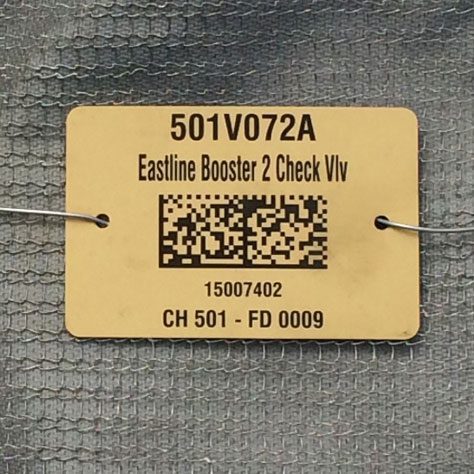
Asset tags are identification tags attached to assets. These small, durable labels contain unique identifiers that allow businesses to track and monitor their physical assets, from computers and equipment to furniture and vehicles.
Think of an asset tag as a license plate for equipment: the tag itself is just a durable label, but the unique ID it carries connects the physical item to its digital record. Scanning the tag pulls up the asset’s location, custodian, maintenance history and depreciation status in seconds.
Asset tags are attached to both movable and fixed assets for useful life identification, inventory control, work-in-process (WIP) tracking and Computerized Maintenance Management System (CMMS) tagging.
Assets are defined as physical property and fall into two primary categories:
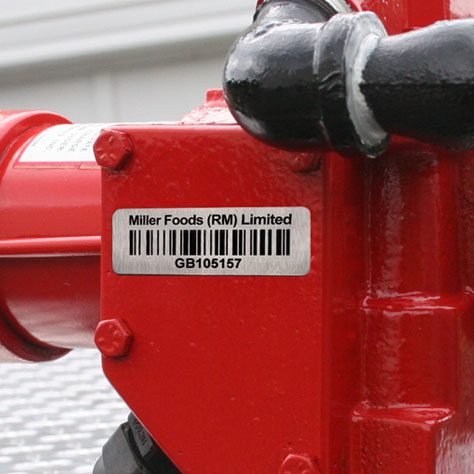
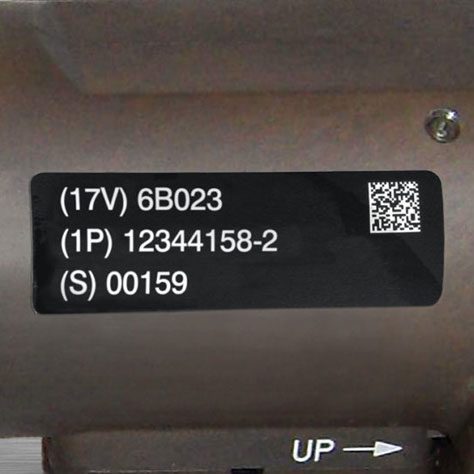
Asset tagging is the process of affixing unique identification labels or tags to an organization’s physical assets, such as equipment, machinery, vehicles, IT assets and other valuable items. These asset tags typically contain a barcode, QR code, RFID tag or serial number that serves as a unique identifier linked to that specific asset in an asset tracking system.
The primary purpose of asset tagging is to enable organizations to track and manage their assets effectively throughout their entire lifecycle. By assigning a unique ID to each asset, companies can:
The theft problem asset tags address is organized, not opportunistic. As the NICB’s chief executive told the U.S. Senate:
“Most cargo thefts are not the result of small operations, rather they are committed by well-funded, sophisticated criminal businesses.”
– David J. Glawe, President and CEO, National Insurance Crime Bureau. U.S. Senate Judiciary Committee testimony, July 2025
Against organized theft, tagged and registered equipment is materially harder to fence and materially easier to recover.
Asset tagging gives organizations greater visibility, control and accountability over critical physical resources. The tags themselves can be customized with additional information such as asset descriptions, purchase dates and condition status, further extending what each scan can tell you.
Asset tags work by pairing a physical identifier with a digital asset record. The process has four steps.
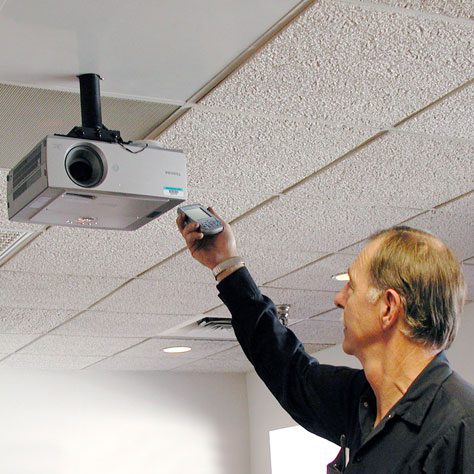
Barcode and QR tags require line-of-sight scanning, while RFID tags can be read wirelessly without direct line of sight.
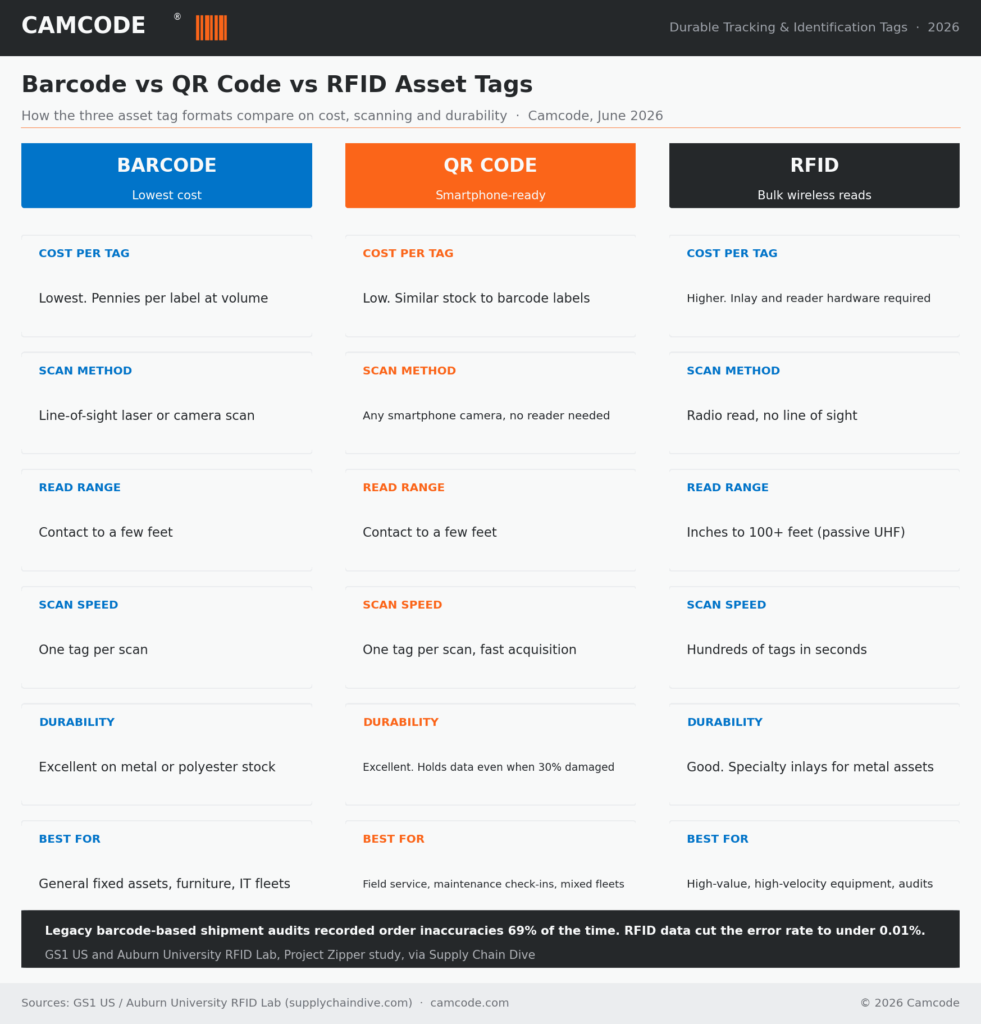
Barcode, QR code and RFID asset tags differ in cost, scan speed and durability.
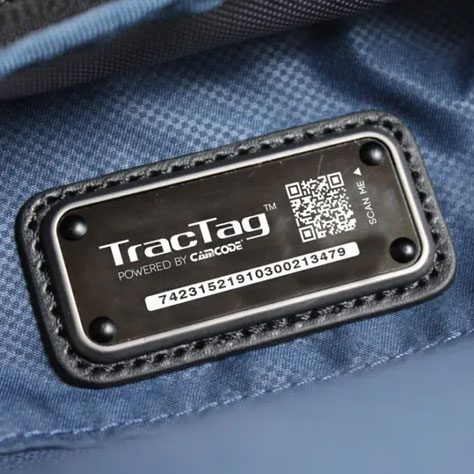
Barcode tags are the cheapest and scan one at a time with line-of-sight readers. QR code tags hold more data in a smaller footprint and scan with any smartphone camera, making them the default for field service teams. RFID tags cost more per tag but scan in bulk without line of sight: a fixed reader can inventory an entire storeroom in seconds.
A GS1 US and Auburn University RFID Lab study found legacy barcode-based audits recorded order inaccuracies 69% of the time, while RFID data cut that error rate to under 0.01%. Most organizations mix formats, using barcode or QR labels for general assets and RFID for high-value, high-velocity equipment.
The lab that ran the study was blunt about what the legacy error rate means:
“The supply chain data accuracy processes have been frozen in time for decades, and a lot of the brands and retailers are begging for improvements.”
– Justin Patton, Director, Auburn University RFID Lab. Supply Chain Dive, October 2018
The fix starts at the tag level: assets that carry machine-readable IDs produce data that does not depend on anyone’s typing.
Asset tags pay for themselves in four ways: automated data capture, loss prevention, faster maintenance workflows and cleaner audits. The sections below break each one down.
Fixed asset tags are useful for automating documentation and collecting valuable data regarding asset utilization, automating routine maintenance and tracking repairs.
For moveable assets, asset ID tags are a valuable tool in loss prevention. Assets shared among departments or those that frequently flow throughout an organization are often easily lost and, sometimes, stolen.
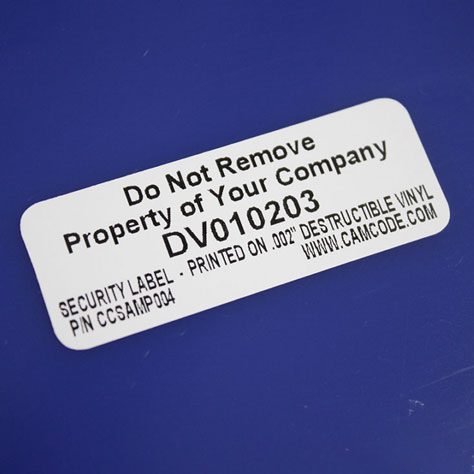
The use of asset tags with built-in security features, such as tamper-evident asset tags, enables organizations to keep tighter control over assets that are rarely in the same location and provides a deterrent to theft of high-value assets.
| Benefit | What it means in practice |
|---|---|
| Automate documentation | Asset tags enable automated collection of data regarding asset utilization, maintenance schedules and repairs. |
| Loss prevention | For movable assets, asset ID tags help prevent loss and theft, especially for assets shared across departments or locations. |
| Streamline maintenance | Asset tags allow organizations to streamline maintenance and repair workflows by tracking asset histories. |
| Inventory control | Asset tags facilitate easy cataloging and tracking of an organization’s valuable physical assets. |
| Regulatory compliance | In certain industries, asset tagging may be required to meet regulations around asset identification and tracking. |
| Security features | Tamper-evident asset tags provide deterrence against theft of high-value assets that frequently change locations. |
Asset tags and asset tag labels enable organizations in a variety of industries to track and monitor valuable assets. Below are a few of the industries in which asset tags are commonly used as part of a larger asset management initiative.
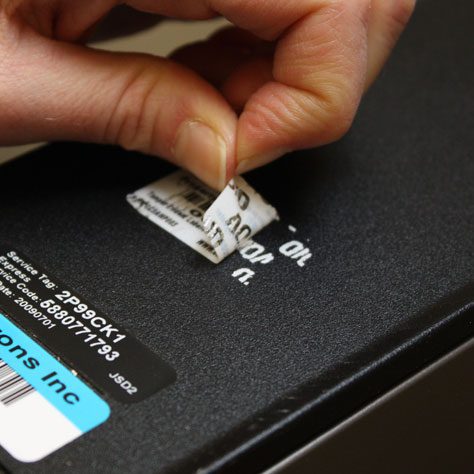
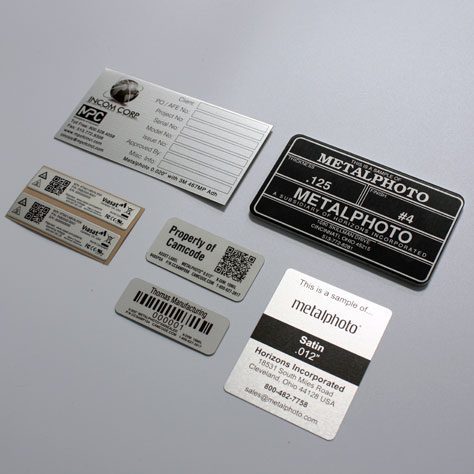
There are many types of asset tags, most designed for specific applications requiring superior durability or other features, such as tamper evidence to deter theft or unauthorized transfer. Asset tags include industry-specific options, such as:
Other examples of types of asset tags include:
These examples represent just a few of the many types of asset tags available. The variety of specially designed asset tracking tags lets businesses build a tagging program that matches application-specific requirements across the entire organization.
There are a multitude of types of asset tags, many designed for use in specific applications requiring superior durability or other features, such as tamper evidence to deter theft or unauthorized transfer. Asset tags include industry-specific asset tags, such as
Choosing the right asset tag comes down to five factors:
From a decision-making standpoint, follow this process:
ASSET TAG SELECTOR
Answer five questions and get a tag recommendation matched to your environment, surface and security needs.
The primary purpose of an asset tag is to uniquely identify and track physical assets throughout their lifecycle within an organization. Asset tags allow companies to:
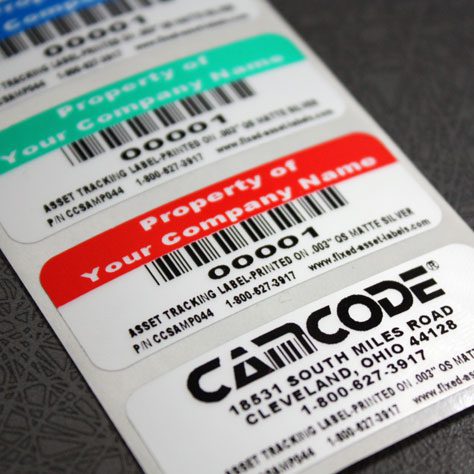
An asset label, also called an asset tag, is a physical label or sticker affixed to a company’s fixed assets like equipment, machinery, vehicles, IT assets etc. An asset label contains a unique identifier such as a barcode, QR code, RFID tag or serial number linked to that specific asset in an asset tracking system.
While a serial number is a unique code assigned by the manufacturer, an asset tag is a separate identifier created by the company to track the asset internally. Serial numbers may not be unique across manufacturers, whereas asset tags are customized and guaranteed to be unique within an organization’s asset pool.
The standards for asset tagging fall into two groups:
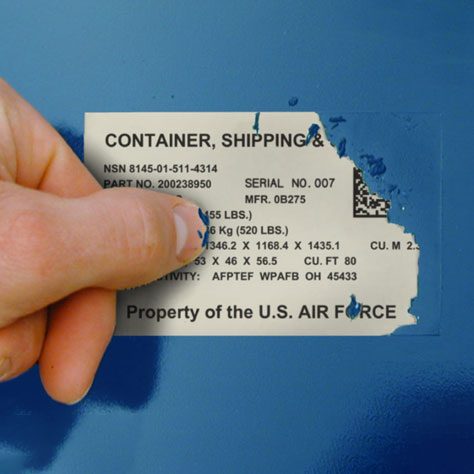
The most cited asset tagging standards are MIL-STD-130, the U.S. Department of Defense standard for unique item identification (UID) marking, GS1 standards for barcode numbering, ISO/IEC 15418 and 15434 for data syntax and ANSI MH10.8.2 for data identifiers. Regulated industries layer additional requirements on top, such as utility pole tagging rules and LDAR tagging for leak detection programs.
Organizations selling to the federal government must meet MIL-STD-130 marking requirements for items above DoD unique identification thresholds.
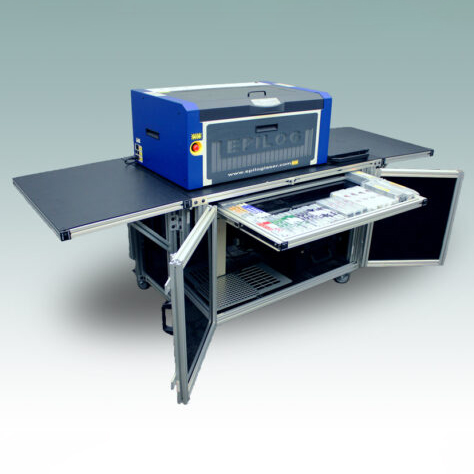
Yes, you can print your own asset tags using a thermal transfer printer and polyester or vinyl label stock, and for short-lived indoor assets that approach works fine.
The tradeoff is durability. Office-printed labels typically fade, smear or peel within a few years, while photosensitive anodized aluminum tags remain readable for two decades or more outdoors.
Print tags in-house when assets are indoor, low-value and frequently replaced. Order preprinted tags when assets face abrasion, chemicals, UV exposure or temperature extremes, when you need tamper-evident or two-part construction or when a compliance standard such as MIL-STD-130 dictates tag material and marking method.
Need preprinted tags? You can design a custom label online.
You can start by using our free asset tag generator
Using this online tool, you can create and generate a fully customized concept design for an asset tracking label, warning label, CMMS label, identification label, or any other label your project may require.
Our sales engineers are experts in automatic asset tracking, tagging and identification,a nd can answer all your questions. Get in touch now.
Lets Talk ›Enter your information and get a free checklist of the top questions to answer and tips to plan a successful asset tagging project for any asset management or tracking system implementation.